Showing posts with label Fishes. Show all posts

21 August 2011

Common Freshwater Fish in New York Part 6


Black Crappie
Grows 8-12 inches long; occasionally larger. With exception of the Adirondacks, common in waters across the state. Prefer clear, quiet areas of lakes, ponds and larger rivers with abundant vegetation. Eat small fish and insects.

Brown Bullhead
Averages 8-14 inches long. Easily recognizable by its broad, flat head and dark barbels (whiskers) around face. Has sharp spines on dorsal and pectoral fins. Very adaptable, it is the most common catfish in New York, found in cool Adirondack lakes, but most abundant in warm water ponds, lakes and larger, slow moving streams. Night time bottom feeder, uses barbels to locate food, including insects, snails, worms and small fish.
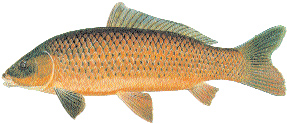
Common Carp
Large fish, carp average 15-20 inches long, but can grow to over 40 pounds in weight. Have large, heavy scales and two short barbels (whiskers). Found across the state except in cold trout streams and lakes. Prefers slow moving water with a soft bottom. Adults eat a variety of plant and animal material, often stirring up a cloud of mud as they feed.

05 August 2011

Common Freshwater Fish in New York Part 5


Walleye
Largest member of the perch family, averages 10-25 inches long. Found in every major watershed in New York except on Long Island. Prefers deep water sections of large lakes, streams and rivers. Have large, light-sensitive eyes to locate food in poor light. Large canine teeth used to catch favorite food of fish. Most active at night.

Yellow Perch
Grows 6-12 inches long. Easily distinguished by the 5-9 black vertical bars on their yellow sides. Important panfish, common across New York in a variety of habitats, but prefers shallow, weedy protected sections of rivers, lakes and ponds. Eat variety of organisms including aquatic insects, crayfish and fish. Popular with ice fishing anglers.

White Perch
New York’s smallest member of the temperate bass family, white perch average 6-12 inches long. Can live in both fresh and saltwater. Are native to brackish water, but now also occur in rivers, lakes and reservoirs. Found in several waters across the state, including the Hudson River, the Great Lakes and the Seneca and Mohawk river systems. Often occur in large schools in turbid, shallow areas. Adults eat fish and insects.

05 July 2011

Common Freshwater Fish in New York Part 4


Brook Trout
Averages 12-15 inches long in ponds and 8-12 inches in streams. Also called speckled trout, brookies have a distinct bright white edging along their lower fins. New York’s official state fish, brook trout live in small to moderate-sized clear, cold streams, lakes and ponds. Primarily eat insects.


Atlantic Salmon
New York’s only native salmon, Atlantics are one of our most highly-regarded sportfish. Adults average 12-30 inches and prefer open deep waters of cold, deep lakes. Primarily eats fish. Also known as “landlocked salmon,” New York’s Atlantics spend their entire lives in freshwater. Found in about 30 waters across the state.


Chinook Salmon
Also called king salmon, chinooks are the largest of the Pacific salmon, averaging 24-44 inches. Found only in lakes Erie and Ontario and their tributaries. Adults eat fish.

17 June 2011

Common Freshwater Fish in New York Part 3

Brown Trout
Originally from Europe, browns are large fish, averaging 8-20 inches in inland waters and 20-32 inches in the Great Lakes. They are more tolerant of warmer water than brook trout, found in waters across New York, but prefer cool streams and lakes. Adults eat aquatic insects and fish.


Rainbow Trout
Colorful, Pacific Coast native, rainbows are quite variable in size, averaging 8-20 inches in inland waters, and 20 34 inches in the Great Lakes. Their name comes from the pink or red band often present on their sides. Prefer cool lakes and large streams. Adults primarily eat fish. Lake-run variety (called steelhead) occurs in lakes Champlain, Ontario and Erie and their tributaries.


Lake Trout
Averages 15-34 inches long, but can reach weights of up to 30 pounds. This silvery or dark gray fish occurs in deep, cold well-oxygenated lakes. A native of New York, lakers are long-lived, some adults reaching 20 years old. Adults primarily eat fish.

03 June 2011

Common Freshwater Fish in New York Part 2

Bluegill
Grows 4-10 inches long. Colourful fish, often mistaken for pumpkinseed, but lacks orange/red spot on gill flap. Found in slow-moving or standing water with plenty of vegetation or other shelter. Eat mostly insects and crustaceans.

Pumpkinseed
Grows 4-8 inches long. Colourful warm water fish with a bright orange/red spot on the gill flap. Most abundant and widespread sunfish in New York occurs in shallow water in a variety of habitats from small lakes and ponds, to shallow, weedy bays of larger lakes and quiet waters of slow-moving streams. Eat wide array of prey such as insects, crustaceans and small fish.

Redbreast Sunfish
Grows 4-8 inches long. Gets its name from the bright yellow to orange-red breast. Differs from pumpkinseed by its long, narrow black gill cover. Confined to eastern portion of the state. Inhabits lakes and ponds, but prefers clear, slow-moving streams with sandy or rocky bottoms. Eat mostly insects and
crustaceans, plus some small fish.

31 May 2011

Common Freshwater Fish in New York Part 1


Largemouth Bass
Largest member of the “sunfish” family, averages 8-17 inches long, and has been known to reach weights in excess of 10 pounds. Found among dense aquatic vegetation or close to submerged cover such as stumps, logs or dock pilings in warm, shallow, well vegetated areas of lakes, ponds and sluggish streams. Eat primarily fish, crayfish and frogs.


Smallmouth Bass
A large sunfish, averages 8-15 inches long. Smallmouths prefer cool, clear areas of lakes and streams with gravelly or rocky bottoms. Adults usually stay near protection of rocks and submerged logs. Eat primarily fish, crayfish and insects.


Rock Bass
Grows 6-10 inches long. Their bright red eyes earn them the nickname “redeyes.” Found in waters across the state; most abundant in rocky, gravelly shallow water areas of lakes and ponds, and lower, warm reaches of streams. Often occur with smallmouth bass. Eat mostly aquatic insects, crayfish and small fish.